Showing posts with label gaming. Show all posts

Monday, October 10, 2011

The Uru Problem

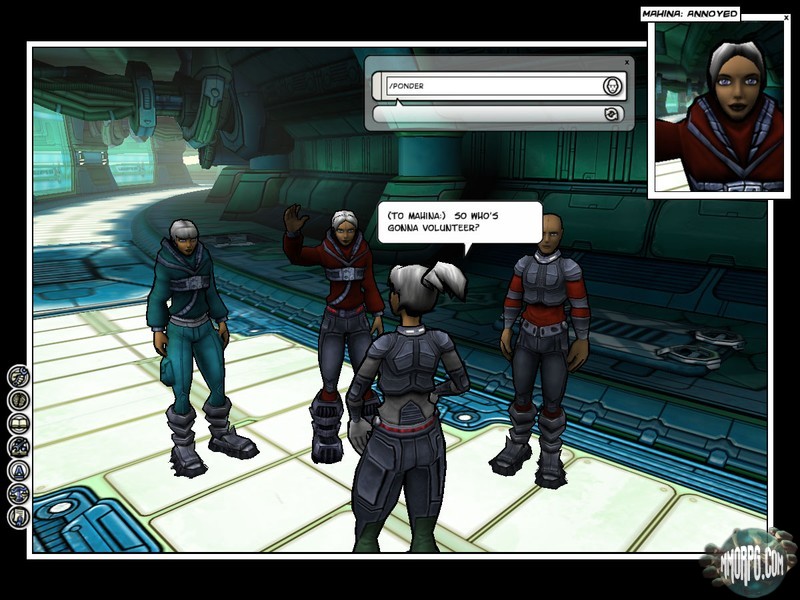
I love Uru Live, but I'm pretty much the only one.  I love the concept, I love the execution, I love the beauty of the environments, and yet it fails and fails and fails.  I think its been through 4 or 5 cycles of death and rebirth by now, having nearly bankrupted what used to be the richest video game company in the world, being resurrected each time solely because the people who made it believe in it too much to let it die.  The thing I want to know is why this happened.  

Archaeologists up, orcs down.

I remember when MMOs were a pretty new idea, and I'd never played one, but I'd heard about them.  I was really excited about the idea, but mostly because the games I was imagining were games like Uru:  Community focused, roleplaying intensive, "shared world" experiences with an emphasis on exploration and world building.  This is where it always seemed to me that the real potential of massively multiplayer gaming lay.  Instead, we have over 12 million people playing WoW while Uru hangs by a thread and the much-lamented SEED  died before it even left beta.  Do these concepts really not appeal to people?  I fully understand the addictive quality of the "get loot, get levels" style that's so dominant in the format, yet I don't see why that precludes the possibility of there being more mature, focused entries that actually use their collaborative nature for something more interesting than comparing your stats and ganking n00bs.
SEED was both in space and not about laser guns.  Apparently this caused the world to implode.
Am I missing something?  Are there any other story/environment/character driven MMOs out there that are doing OK?  Or is there simply no market for this kind of stuff?

Addendum:  In it's latest incarnation, Uru is entirely donation supported.  This means that if you're interested in playing, you should immediately go download it and try it, since it's completely free.  It offers an MMO experience remarkably close to my initial vision of what these sorts of games would (and should) be, with no levels, no stats, no swords,  and a remarkably fleshed out and detailed dead civilization to explore and understand.  It involves a lot of research and lateral thinking, and creates one of the most immersive game worlds I can name.

Sunday, September 18, 2011

Mount & Blade

I'm sure by now no one is even checking this place anymore since it's been inactive for so long and I'm probably just presumed dead, but suffice to say that my life has been pretty hectic as of late and I haven't had enough time to properly formulate any new articles.  I still don't, so I've decided to throw caution to the wind and not bother properly formulating anything, which is why I'm dashing this out during my lunch break at work.  Enjoy.


TaleWorlds' action rpg/strategy/nobleman simulator Mount & Blade (and by extension, it's sequels "Warband" and "With Fire and Sword") always seemed like a pretty cool idea, and I'd heard a lot of positive hype surrounding it, so I took the plunge when it was on sale on Steam this weekend.  I must say, it's a really intriguingly ambitious project, but so far the execution has left a lot to be desired.  It's a free-form, open world game set in a more or less realistic medieval continent with a variety of warring kingdoms that you can work for and against.  For this article, I'm talking about Warband, the 2nd game in the series, which is by far the most popular and the only one I've played so far.

You begin with character creation, where you fill out a questionnaire about your background that decides things like social status, starting stats, and starting skills.  I like this method a lot, and generally praise games who can implement backstory-based character generation without making it a really contrived and transparent "And then I went to sword school.  To learn sword things." because it helps set up a greater degree of immersion and allows for a more roleplaying-y feel.  One problem with this in M&B is that you can set up chains of events that don't really make sense.  It's possible to go from "Son of a thief" to "Street urchin" to "Knight's Squire," which just seems a little sloppy to me.  All they had to do was come up with some other combat-oriented option to give you if you came from a really low beginning that would have the same mechanical effect but a different name.  Renaming it "Local Ruffian" or "Mercenary" or something would have taken 2 seconds and stopped it from breaking the very immersion they're striving to create.


Then you get to design your character's face using 4000 different sliders for chin length and eye socket depth and whatever.  Why does every game have to do this now?  I know that game designers mean well with this system, thinking that it gives you the maximum degree of freedom in designing your character's appearance, which is what people want.  They are incorrect.  Instead, it makes it next to impossible to make a character who doesn't look like they have some serious genetic defect.  If they just gave you a variety of options for each trait (10 noses, 10 eye shapes, 10 mouth shapes, etc.) it would be so much easier to make characters who actually look like human beings and you would still have more than enough options to choose from.  Instead, every character I have in every game looks like some part of their anatomy has been attacked by hammer wielding apes.

Herpin' some derps.
Then it sets you loose in the realm.  The learning curve is quite steep, and there's really no explanation of what you can or should be doing, which is at once exciting and daunting.  You can travel around, meet companions, hire soldiers to fight in your company, and do quests, but there are a lot of other, more subtle things going on.  You can engage in courtship and try to marry into power, or just blow off all the kingdoms to raid villages and terrorize peasants.  You can even engage in market speculation and become a trade baron if you like to not swordfight in a game about swordfighting.  The kingdoms are constantly changing, sending troops to attack one another, forming alliances, and killing or capturing eachother's leaders, and you just kind of exist amidst the flow until you gain enough power to begin directing it.  I loved this kind of game when I was younger and had fewer responsibilities, and thus had more time to devote to them.  The idea of a huge, dynamic world full of tons of possibilities to explore and discover is awesome.  But at the same time, I find these games more and more overwhelming, and frequently find myself without the time or energy to devote to learning their many intricacies.  I was nearly paralyzed by New Vegas at first for this same reason, and M&B has an even greater degree of complexity.

As the name would suggest, Mount & Blade is a game largely focused on mounted combat.  When a battle starts, you and the rest of your troops all charge onto the battlefield, usually a large distance from the enemy.  This allows you to set up different tactical formations before the fighting starts, and use the terrain to your advantage.  Once the hacking begins, you can attack with different kinds of swings depending on how you move the mouse as you click, which all require different guard positions to block.  Your foes do likewise, and so, as in actual swordfighting, the trick becomes reading their movements to block correctly and making your own moves difficult to predict.  This sounds awesome, and in some ways it is, but the actual mechanic for using it feels a little clunky and counterintuitive. For one, when you move the mouse to decide your swing or block, it moves the camera as well, making fighting really disorienting.  For another, it's pretty hard to actually connect with anything when on horseback (fighting dismounted is more dangerous, but you also hit what you aim at a lot more often), and blocking is entirely hopeless.  This could well be my own lack of experience with the game or general ineptitude speaking, but in the middle of a huge melee I find it more or less impossible to actually plan strikes and feints while attempting to determine where the 5 guys surrounding me are going to be swinging from.
^ My character in every battle ever

Multiplayer is apparently where it's at in Warband, and I don't feel like I'm capable enough in a fight yet to even consider embarrassing myself on the internet yet, but I'm a little disappointed to discover that there's no campaign coop.  The multiplayer is just skirmishes, yet the completely open ended design of the campaign almost demands a multiplayer function.  Even if it was just having other PCs in your party all roving together as part of the same company, that would be hella fun.  And if you were each running your own warband, either working together or apart, well, that's what the game feels like it was designed for.

You can download a demo of Warband here.

Monday, August 8, 2011

Shock: Social Science Fiction


I've rarely loved anything the way I love Joshua A. Newman's Shock (stylized "Shock:" by the author). This is why RPGs exist.   Those who know me are aware that, even back in my D&D days, I was never really interested in the whole "get loot, go up levels" focus of a lot of games.  Shock is most decidedly not one of those games at all.  Instead, it works like a collaborative world-building and novel-writing framework with a laser-like focus on the thing that makes the science fiction genre interesting, namely the way it explores extrapolated societies and their pressures.  In a single sentence, Shock: is not quite a game, it's more like an engine for creating dense, meaningful, exploratory stories like Dune, Neuromancer, and The Left Hand of Darkness, and then watching them play out in realtime with a bunch of your friends.

The game starts with creating the world.  There are 2 major elements that need to be decided upon, called Shocks and Issues.  Shocks are the scifi insertions that separate this world from our own.  Shocks can be anything: old classics like "Robots," "FTL Travel," and "Human Cloning" or stranger excrescences like "Death is reversible."  The other category, Issues, Are the social concerns that will be important to the society.  "Corporate Greed," "Human Rights," whatever, these are the confilict zones that will drive the story.  Everyone comes up with these together, all the players building on eachothers ideas and tossing out suggestions until you have your shocks and issues set, as well as an understanding of how they intertwine to create a functional, realistic alien/future society.  Each person gets to "own" a shock or issue, giving them final say on any matters related to that particular subject and how it pertains to any situations in the fiction.  Given the conflicts at stake, you then create the Praxis Scales, the measures of how things are done in this world.  There are 2, and each has 2 differing ways of solving problems that are emblematic of the culture and its core issues.  For example, Neuromancer might look like this:

Shock: Cyberspace
Issue: Urbanization
Issue: Globalization
Issue: Wealth Gap
Praxis:  Buying vs. Stealing
Praxis: Confrontation vs. Deceit


When you are done making the world, you populate it.  Everyone plays 2 characters, a protagonist and and antagonist.  Each protagonist is defined by his/her/it's conflict with one of the issues in play, which will form the backbone for their individual story.  Each character is also given a rating on both praxis scales, showing what their most effective means of getting things done are.  Once each player has a protag, they choose another players protag and create an antag for that character.  An antag can be anything, an individual, an organization, a political movement, whatever.  It's the force that drives the protag into conflict with their central issue.  The also are rated on the praxis scales.

When play begins, you take turns going around the room, each player getting a turn to showcase a scene where their protag battles with their issue, and the person playing their antag trying to break them down or push them into greater conflict, and all other players adding details and subtly changing the outcome of events through their manipulation of the shocks and issues they own.  Each antag has a pool of points they use to hamper the protags, and when they run out, that particular story enters its conclusion. You're basically guaranteed tons of interesting character play, a deep multilayered meta-narrative constructed from the individual protags' stories, and even some meaningful commentary in the course of a single night.   If you're playing with smart, cool people (which you doubtless would be), you're probably going to end up with something that would be worthy of a Hugo nomination after a couple of drafts.

Addendum:
Kelly, Jon, and Ben, if you read this, we need to have another hot-tub Shock: party when I'm back in the US.

Thursday, July 28, 2011

Character Erosion in Game Design

If a game is going to allow your character (in this article, "character" is used loosely to describe any avatar that the player controls, be it a person, a vehicle, an abstract shape, or whatever) to change over time, it almost always follows a process of construction.  At the beginning your character is at the nadir of their capability which increases with the passage of time and the completion of objectives.  RPGs are the most obvious example with their highly structured systems of levels, stats, and gear that demonstrate numerically the continually increasing ability of your character to overcome the obstacles he is presented with.  Indeed, levelling up and growing in capacity is one of the things that draws so many players to the genre.  This is evident almost every other popular genre of game that features a changing character.  Action game characters accrue more powerful weapons and skills, RTS and 4X cities develop improved technologies and units, and so on.


This makes perfect sense of course.  Games are primarily escapist fantasy (sorry Tale of Tales), and achievement is something that's fun and motivating.  However, I'm quite intrigued by the narrative, mechanical, and stylistic opportunities that could be afforded by taking the opposite approach: one of character erosion.  Instead of beginning with very little ability to overcome obstacles and growing, what about games where the character begins at the peak of their power, and only decreases over time?  A game where the only place your character can go is down would have a pretty profound effect.

A bad time for your gun to break.
One of the things that is continually lauded about the Survival Horror genre is its mildly erosive quality.  All the most acclaimed games in the genre like System Shock, Silent Hill, and the earlier Resident Evils focus in large part on managing highly limited quantities of important items like ammunition and health.  Every time you fire your gun or take a hit, you use up a substantial portion of a finite resource.  This is taken even further in System Shock 2, where all of your weapons are subject to degradation over time and, without maintenance (which also requires the use of consumable tools), are doomed to eventual malfunction and destruction.  However, these games are still mostly constructive, giving the player access to better equipment and more resources over time, eventually allowing them to build enough of a stockpile that they feel more confident by the endgame.  Imagine how much more intense a firefight would become in SS2 if you knew that not only did you have a limited supply of bullets for this encounter, but that you were never, ever going to find any more.

Better make those count, because you're not ever getting more.
This brings me to Valve's Alien Swarm, a sadly unknown cooperative action/survival game that's free to anyone with Steam.  At the start of each level, all players select equipment, and are then forced to ration it for the remainder of the level.  There are no ways to replenish ammo which is always in very limited supply, and reloading with bullets left in a magazine wastes them.  Health kits are limited to the medic class, and once again there are only a small number available with no way to restock.    The game is quite hectic and you are never as capable again as you are at the start of the mission.   Its not uncommon to have multiple players out of bullets and resorting to clubbing at waves of monsters by the end of a level, and every heal has to be prioritized and triaged due to the set number of medkits.  Because of these factors, Alien Swarm feels almost unbearably tense at moments, more so than it's cousins Left 4 Dead and Killing Floor can hope to achieve due to their constructive model of increasing capability.

Leaving base mechanics behind, what about character erosion in the narrative sense?  I've long been a fan of Jack Monahan's Gausswerks Design Reboot blog, and I feel that he and I share many of the same sensibilities about game design and particularly the implementation of meaningful narrative connected to, rather than on top of, the mechanics.  Of particular interest are his reinterpretation of Clive Barker's Jericho and his truly sublime concept for a Deus Ex prequel: Laputan Machine (He actually conceived of the DX prequel as a duology consisting of both Laputan Machine and a sister game titled Flatlander Woman.  Flatlander Woman is also more than worth reading, but only Laputan Machine really digs into narrative erosion.)  Both the Jericho reboot (henceforth JR) and Laputan Machine (LM) focus on unavoidable, irreversible decay of the characters' states as they endure continued abuse.

^ All your friends.
In the original Jericho, one of the game mechanics revolved around a priest character being able to resurrect dead squad members, but there were no consequences for this.  In JR, each time a squad member is ripped back from the afterlife, they leave a small piece of themselves behind.  They continue to function mechanically exactly as they always did, but each successive resurrection makes them lose a little bit of vitality and personality, until eventually you are left with soulless revenants, still capable of fighting but devoid of all humanity.  In game terms nothing has changed but the manipulation of the narrative layer adds a penalty to having your characters die which is altogether more effective than any purely mechanical one.  This one shift radically alters the tenor of the entire game.  JR is no longer a bombastic action/adventure story, it's now a game about using people up until there's nothing left of them, and continuing to use them some more.


LM rather cleverly couches its erosive elements in the appearance of construction.  As Gunther Hermann acquires mechanical boosts to capability via cybernetic augmentation, his mental state and self image deteriorate proportionately.  Similarly, using your "upgrades" reinforces his dissociation from humanity, dragging him closer and closer to the monster that he has become by the time Deus Ex begins.  This is, I think, an especially intriguing concept as it forces players to question what is the real measure of fitness in the game. Is it the mechanical benefit provided by Gunther's augs, the ability to overcome physical obstacles that is the normal gauge for a game character?  Or is it his sanity, something less tangible and less conducive to "fun" gameplay in the traditional sense?  Either way, LM sets up a catch 22, as increasing one decreases the other, forcing meaningful erosion of some sort to become a defining element of the game experience.

So what do you guys think?  Is a game predicated on erosion something you'd want to play?  Or do you play games to achieve things, rather than lose them?

Addendum:  It just occurred to me that Shadow of the Colossus, possibly the best game ever, is so great in large part because of its narrative erosion.  The player figures out early on that what he's doing can't possibly be good, yet you keep helping the character do it all along.  Each time he kills a colossus the deed quite literally stains him, enshrouding him in black tendrils of what may as well be pure evil and leaving him looking more disheveled and weary each time.  SotC is, after a fashion, a chronicle of the character's downfall, an experience of mounting guilt and foreboding that builds up to a terrible failure rather than a triumphant victory. This is the thing everyone remembers about it, and the reason everyone loves it so much.  It is also a great example of erosion.

Tuesday, July 19, 2011

The Other: A Storytelling Game of Alienation

Nicholas Dowbiggen's "The Other" is a free, extremely rules-light take on the horror RPG that is more or less entirely unknown, but deserves wider appreciation. Inspired by the kind of haunting, psychological dread characteristic of the Silent Hill series of games, "The Other" is almost entirely focused on the steady mental degradation of its characters. Certainly, this in and of itself is nothing particularly new. Call of Cthulhu and its venerable sanity system have been compelling would-be paranormal investigators to suicide and madness for more than 20 years. The thing that is so compelling about "The Other" is the total primacy to this idea. While sanity is important to CoC, it is simply a part of larger equation, and more often than not has a way of becoming little more than a secondary hit point system. In "The Other," the psychological state of the characters is the only thing that matters. All other elements are seen through the lens of your mental decay. The question isn't so much whether you have the skills to pick a lock or aim a gun, but whether you have it together enough to do so, and how the increasing pressure reveals new aspects of your character.

Each character has three Progression Stages, emblematic of their decreasingly rational methods of response to the formless evil that pulls the strings behind their world. Each Progression Stage has a number of Threshold Notches (3 for the first, 2 for the second, 1 for the last). Whenever the player loses a roll against the Other, they go down a notch, crossing into new stages as appropriate. Each stage describes the overarching attitude of the character, which changes as the stress increases. The stroke of genius comes from the fact that character creation consists entirely of a 3 page psych evaluation that the player hands in to the GM, who then creates appropriate progression stages for the character, which he keeps hidden until they come into play. So, much like in reality, the players don't really know how they're going to respond once they snap, and the ramifications are much more personal and character driven than CoC's "run screaming" or "go catatonic" sanity effects. It also contributes to mechanically aided character development, as each progression stage reveals something about your character's unconscious mind.

On a similar note, each character has a Stress-Perception Symptom and a Repression Symptom which are unknown to the player but shape the way that the game plays out. The Stress-Perception Symptom is a buried truth integral to their personal story that they must cut through the Other's machinations to uncover. More interestingly, the Repression Symptom is a lie, something important that they believe to be true, but that is in fact a self-deception they must overcome.

The combination of the Progression Stages and Repression Symptoms makes every character delightfully unstable, creating one of the few roleplaying experiences I can think of in which the players themselves are unreliable narrators. I cannot stress highly enough how cool this is, and how much more conducive it is to genuine horror than pretty much any other system I can think of. When a game forces you to question not only the world, but your character's perceptions of both himself and the world around him, you know you've found something special.

Sadly, the blog on which this game was originally posted has been reabsorbed into the seething froth of primordial darkness, but I've put it up for download here: http://www.mediafire.com/?tc5q4m97v144sty.

If anyone plays it and wants to share experiences, I'd love to hear how it went for you.